
Pokémon Champions
The Pokémon CompanyStrategy
4.64.51K Reviews
- Version
- 1.2.3
- Installs
- 5.00M
- Age Rating
- Everyone
Screenshots
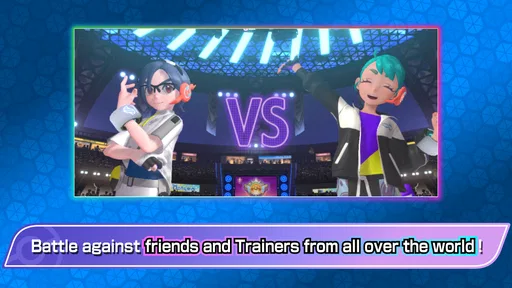
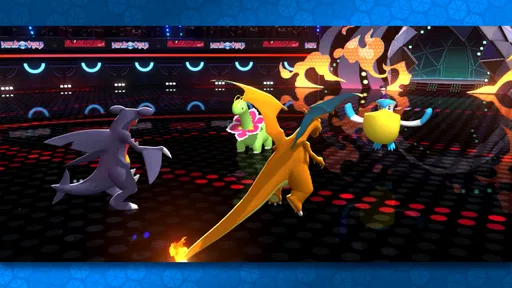

Our Review of Pokémon Champions
 Analysis by Appyee
I went into Pokémon Champions expecting a familiar Pokémon battle experience, but what stayed with me was how much attention it asks from the player between turns. This is a free strategy game from The Pokémon Company, built around the appeal of making a good choice at the right moment rather than simply collecting a team and tapping through easy fights. It is also rated for Everyone, which makes it approachable for younger players and families, while its decision-making gives experienced fans something more thoughtful to work with.
The basic attraction is easy to understand: you bring Pokémon into battles inspired by the main series and try to outplay the opposing side. The more interesting question is whether the game suits the way you like to play. If you enjoy planning, reading an opponent, and learning from a narrow defeat, it has a strong chance of becoming a regular part of your gaming routine. If you mainly want a relaxed collecting game or a quick adventure with little pressure, its strategic focus may feel demanding.
Where the real decisions begin
My first useful lesson was that team selection is only the beginning. A Pokémon that looks powerful on paper is not automatically the best choice for every situation. I found myself thinking about how a team works as a whole: which members cover one another, which choices create pressure, and which options leave me exposed if the opponent anticipates my plan. That makes each battle feel less like a simple exchange of attacks and more like a sequence of questions.
The key decision is often not “What can deal the most damage?” but “What does this move allow me to do next?” A safe action may preserve a valuable option for a later turn, while an aggressive choice can force the opponent to respond immediately. I recommend new players resist the urge to use their strongest-looking option every time. Watching how the other side reacts is often more informative than chasing a quick advantage.
This is where the game separates itself from a basic casual battler. The familiar Pokémon identity makes the first steps comfortable, yet the strategic layer rewards players who think in terms of position and future turns. I began to treat every action as part of a plan rather than an isolated button press. That habit is useful when facing a clever opponent, because a move that seems modest may be preparing a much stronger follow-up.
For an everyday example, imagine playing during a short break and reaching a battle that looks nearly even. You may be tempted to rush because you only have a few minutes. In my experience, that is exactly when a patient decision can matter most. Taking a moment to identify the opponent’s likely response can prevent a mistake that costs the whole exchange. The game works well in that situation if you enjoy focused play, but it is less suitable when you want something that can be played mindlessly while multitasking.
Planning a team instead of chasing individual strength
I found team building more satisfying when I stopped judging each Pokémon alone. A balanced group gives me more ways to respond when the first plan fails. That does not mean every team must look the same. A player who likes pressure can build around forcing fast reactions, while someone more cautious may prefer options that preserve flexibility. The important point is to understand what your chosen group is trying to accomplish.
A practical approach is to give every team member a job in your mental plan. One may be your preferred opener, another may help stabilize a difficult matchup, and another may be the option you save for a decisive moment. Thinking this way makes losses easier to analyze. Instead of saying that the opponent was simply stronger, I can ask whether I used the wrong Pokémon too early, failed to protect an important option, or committed to a plan the opposing team was ready to answer.
That kind of review is one of the less obvious strengths of the game. It turns a battle into a small strategy exercise even when the result is disappointing. I recommend changing only one part of a team or approach at a time after a loss. If everything changes at once, it becomes difficult to know what actually improved. Small adjustments make the learning process clearer and help prevent random experimentation from replacing real planning.
Risk is more interesting when the reward is not immediate
Good battles often involve choosing between a clear short-term benefit and a better long-term position. I regularly found myself deciding whether to take an obvious advantage or keep a stronger option hidden. The correct choice depends on what the opponent knows, what they are likely to expect, and how much room I have if the gamble fails.
This creates a useful tension. Playing too safely can allow the opponent to establish control, but taking risks without a reason can throw away a winning position. I prefer risks that test a specific idea: perhaps I am checking whether the opponent will protect a particular Pokémon, or I am trying to preserve momentum before they can recover. A random gamble is rarely satisfying, even when it succeeds.
New players may initially judge a decision only by its result. I think a better standard is whether the decision made sense with the information available at that moment. A move that fails can still be a good learning choice if it revealed something important about the opponent’s habits. Conversely, a move that works once may be a poor habit if it depends on the other player making the same mistake again.
The game therefore rewards a calm attitude toward uncertainty. I would not recommend it to someone who becomes frustrated whenever a carefully considered plan fails. Pokémon battles contain enough unpredictability and counterplay that no approach will work every time. The enjoyment comes from improving the quality of your choices, not from expecting complete control.
Adapting when the first plan stops working
The strongest part of my experience was the need to adapt. A team can look excellent in one battle and awkward in the next because the opponent approaches the situation differently. That keeps the strategy from becoming a fixed script. I had to learn when to continue with my original idea and when to abandon it before the situation became impossible to recover.
Adaptation begins with observation. I pay attention to which Pokémon the opponent protects, when they become aggressive, and whether they prefer predictable or unusual choices. These details help me form a working picture of their priorities. It is not about guessing perfectly; it is about making better decisions than I would make if I ignored the evidence from earlier turns.
One useful habit is to separate an opponent’s actual pattern from my assumptions about them. If I expect a certain response and it does not happen, I should update my plan rather than forcing the next step. This sounds simple, but it is a common source of losses in strategy games. A player can become attached to the opening plan and overlook the fact that the battle has already changed.
I also learned to avoid revealing every option too early. Using the same response repeatedly may feel efficient, but it gives the other player a clear target. Varying the timing of an action can make a familiar plan harder to counter. This does not require complicated play. Even a small change in when I commit to an attack or defensive choice can make the opponent reconsider their own sequence.
That adaptability is especially valuable for players moving from traditional single-player Pokémon experiences into competitive-style thinking. In a story-focused game, the world usually waits for you to prepare and lets you retry with more power. Here, the opponent is actively responding. Familiar Pokémon knowledge helps, but it does not replace reading the battle in front of you.
Why the depth becomes clearer over time
I do not think this is a game that reveals everything in the first session. The initial appeal comes from recognizable battles, but the longer-term value comes from understanding why a decision succeeded or failed. As I became more comfortable, I spent less time asking which option was strongest in isolation and more time considering the order in which I should reveal my resources.
That change gives the game a useful learning curve. Early matches can feel confusing because several possible plans compete for attention. With practice, the confusion becomes more manageable. I began to identify the most important question in a battle instead of trying to calculate every possible outcome. Sometimes the question was whether I could safely preserve a particular Pokémon; at other times it was whether I needed to act before the opponent gained momentum.
Players who enjoy long-term improvement should keep a simple mental record after each difficult battle. I ask myself three things: what was my original plan, which turn changed the battle, and what information did I ignore? This takes less time than rebuilding an entire team and produces more useful progress. It also prevents the common mistake of blaming the final turn when the real problem happened much earlier.
The current version is 1.1.5, and that makes it sensible to approach the game as an experience that can continue to develop rather than something I should judge only by its first few matches. I would still base the decision to play on the battle style itself. Updates can improve presentation or add variety, but they cannot change whether you personally enjoy careful turn-by-turn decisions.
Its popularity also gives it a reassuring starting point. The game has a 4.7 average from around 218 thousand ratings and has passed 5 million installs. Those figures suggest that it has found a substantial audience, but they do not guarantee that every player will enjoy its pace. A high rating is most meaningful here as a sign that the central battle concept connects with many people, not as proof that it is the right fit for a player who dislikes competitive pressure.
How it compares with more familiar alternatives
Compared with a traditional Pokémon adventure, this game places less emphasis on exploring a world and more on the battle itself. If your favorite part of the series is discovering towns, following a story, and steadily becoming stronger through progression, another Pokémon title may be a better choice. I would choose Champions when I want to focus on decisions rather than travel.
Compared with a simple mobile strategy game, it has a more recognizable foundation and a stronger connection to Pokémon battle thinking. Many mobile strategy games encourage short sessions built around upgrading, waiting, or repeating a routine. Here, the meaningful progress is more personal: I improve because I understand matchups, timing, and counterplay better than before. That can be more rewarding, but it also means the game asks for concentration instead of offering effortless progress.
It is also different from a collectible game where the main satisfaction comes from obtaining new characters. Pokémon familiarity is certainly part of the appeal, but the real test is how intelligently I use the options available in battle. Someone who wants a collection-first experience may find the strategic focus less exciting than expected.
Free entry, purchases, and the practical choice
The game is free to play, with in-app purchases listed from $4.99 to $49.99 per item. That makes trying the core experience an easy decision, but I would still recommend setting a personal spending limit before becoming invested. The presence of optional purchases can change how comfortable different players feel, especially families deciding whether a child should play without supervision around spending.
I would not treat the free price as a promise that the entire experience will feel equally satisfying for everyone without spending. At the same time, I would not assume that purchasing something automatically improves strategic judgment. The most important value for me comes from learning the battle system and making better decisions. Anyone considering a purchase should first ask whether it adds something they genuinely want, rather than buying out of frustration after a loss.
The Everyone rating makes the game approachable for a broad audience, but age suitability and strategic suitability are not identical. A younger player may understand the Pokémon presentation while still finding the planning difficult. I think it works best when new players are encouraged to explain their choices instead of being told only whether they won. That turns each match into a small lesson in reasoning.
Who should play, and who should skip it
I recommend Pokémon Champions to Pokémon fans who want battles to be the main event, strategy players who enjoy adapting to another person, and anyone willing to improve gradually rather than expecting immediate mastery. It is particularly good for a player who likes discussing why a move worked, testing a new team idea, and treating a close loss as useful information.
I would skip it if you want a purely relaxing game, dislike making decisions under pressure, or mainly play Pokémon for exploration and story. It may also disappoint players who expect a quick win simply because they know the series well. Familiarity gives you a starting point, but the game still asks you to plan, observe, and adjust.
For parents, the free entry and Everyone rating make it easy to investigate together. I would pay attention not only to play time but also to how the player responds to losing and to the available purchase options. For adults, it fits best into a focused break rather than a background activity. I enjoyed it most when I could give a battle my full attention, even if the session itself was short.
My strategy verdict after playing
Pokémon Champions succeeds because it makes familiar Pokémon battles feel like decisions with consequences. Its strongest quality is not a single flashy feature; it is the way team planning, risk management, and adaptation connect from one turn to the next. I found myself thinking beyond immediate damage and considering what each action revealed, preserved, or invited from the opponent.
There is friction. Losses can feel harsh when I misread a situation, and the strategic focus is not ideal for distracted play. The free-to-play structure also deserves sensible spending boundaries, particularly for younger players. Anyone expecting a story-led adventure or a collection-focused mobile game should look elsewhere instead of assuming the Pokémon name guarantees the same experience.
For me, though, the trade-off is worthwhile. The game gives familiar battles enough strategic weight to support repeated play, and it rewards improvement that comes from better judgment rather than simple repetition. I recommend starting slowly, building a team around a clear idea, reviewing the turn where a battle changed, and resisting the urge to chase every immediate advantage. If that sounds enjoyable, this is a strong strategy choice; if it sounds like work, its popularity will not change the fact that another Pokémon game may suit you better.
Privacy and Permissions
See what permissions an app requests and how it handles your data.
- Other
- view network connections, full network access, run at startup, control vibration, prevent device from sleeping, Google Play license check
Verdict
Strengths of Pokémon Champions
- Deep turn-based battles reward careful planning and team building.
- Official Pokémon presentation makes matches feel polished and authentic.
- Competitive formats can provide long-term replay value.
- Familiar Pokémon roster is appealing to both newcomers and longtime fans.
- Matches are easy to follow, even when battles become strategically complex.
Limitations of Pokémon Champions
- Competitive play may feel intimidating for players unfamiliar with battle mechanics.
- Progress can become repetitive if you prefer exploration or story-driven gameplay.
- Team optimization may require significant time and experimentation.
- Online competition can be frustrating when facing highly experienced players.
- Availability and features may differ between supported platforms or regions.
Other Releases by The Pokémon Company
View All


Similar Picks in This Category
View All
Clash of Clans
Supercell4.5

Plants vs. Zombies™
ELECTRONIC ARTS3.7

Lords Mobile: Kingdom Wars
IGG.COM4.5

Clash Royale
Supercell4.4

State.io — Conquer the World
CASUAL AZUR GAMES4.1

Car Driving School : Car Games
Spark Game Studios3.9
Frequently Asked Questions
What is Pokémon Champions?
Pokémon Champions is a competitive Pokémon battle game focused on strategic, turn-based matches rather than exploration or collecting in a traditional adventure world. It is designed for players who enjoy building teams, choosing effective moves, and testing their skills against other trainers. Before downloading, remember that the experience is centered mainly on battles, so it may feel very different from the mainline Pokémon role-playing games.
Is Pokémon Champions free to download and play?
Pokémon Champions is expected to be available as a free download, although the exact pricing model and optional purchases may depend on the platform and region. Players should check the official store listing before installing it for details about in-app purchases, subscriptions, or other paid features. An internet connection may also be required for online battles, updates, account services, and certain game functions.
Does Pokémon Champions support cross-platform play?
One of the most important points for prospective players is platform compatibility. Pokémon Champions is associated with Nintendo platforms and mobile devices, but supported systems, cross-play features, and account connectivity can vary depending on the official release information. Before downloading, verify whether your device is compatible and whether progress or teams can be used across platforms, since these features may have specific restrictions.
Can I play Pokémon Champions offline?
Pokémon Champions is primarily built around competitive battles and online services, so players should not expect a complete offline experience. Some menus, training options, or practice activities may be accessible without a constant connection, but online matchmaking and account-related features normally require internet access. A stable connection is recommended to avoid interruptions, disconnections, or penalties during ranked and competitive matches.
Is Pokémon Champions suitable for beginners?
Pokémon Champions can be enjoyed by newcomers, but its competitive focus may require more learning than a standard Pokémon adventure. Beginners will need to understand type advantages, abilities, move effects, team composition, and battle rules to perform consistently. The game should offer ways to practice and learn, yet players who are unfamiliar with competitive Pokémon may need patience before feeling comfortable in ranked or online matches.
Play our best games!


